<000005>

婷婷成人在线观看高视频在线_婷婷激情五月天成人网妞妞基地_婷婷九月天成人网站_婷婷色成人网站

笫四色成人网 婷婷五月天成人激情小说琪琪成人电影第四色 婷婷最新成人影视视频 蝌蚪窝成人av视频琦米成人色阁

On the 11th of March the Earl of Radnor presented a petition adopted at a great meeting of inhabitants of the county of Somerset, which led to a long debate, in the course of which the Duke of Wellington earnestly recommended their lordships to leave the Corn Law as it was, and to continue to maintain the system which it was the object of that law to carry into effect; and the Duke of Richmond declared that he was surprised that any doubt could exist that "the farmers were, almost to a man, hostile to the delusions of Free Trade." On the following evening Mr. Cobden[511] brought forward a motion to inquire into the effects of protective duties on the interests of the tenant-farmers and labourers of the country, promising that he would not bring forward a single witness who should not be a tenant-farmer or a landed proprietor; but the debate concluded with a division which negatived the motion by 244 votes to 153.このページの先頭です
ONE: The Church after the RevolutionThe Non-JurorsThe Act of TolerationComprehension BillLaxity of ReligionThe Wesleys and WhitefieldFoundation of MethodismExtension of the MovementLiteratureSurvivors of the Stuart PeriodProse Writers: Bishop BurnetPhilosophers: LockeBishop Berkeley, etc.Novelists: Fielding, Richardson, Smollett, and SterneDr. DavenantBentleySwiftAddisonAddison and SteeleBolingbrokeDaniel DefoeLady Mary Wortley MontaguPoets: PopeHis Prose WritingsGay, Prior, Young, etc.James Thomson, Allan Ramsay, Gray, and Minor LightsDramatistsPhysical Science: AstronomersMathematiciansElectriciansChemistsMedical DiscoverersMusic: PurcellItalian MusicHandelChurch MusicThe Academy of Ancient Music and other SocietiesArchitectureWren and his BuildingsSt. Paul'sHis Churches and PalacesVanbrughGibbsHawksmoorMinor ArchitectsPainting and Sculpture: Lely and KnellerOther Foreign Painters and DecoratorsThornhillOther English ArtistsHogarth and his WorksExhibition of British ArtistsSculptorsShipping, Colonies, Commerce, and ManufacturesIncrease of CanalsWoollen and Silk TradesIrish LinensLaceIron, Copper, and other IndustriesIncrease of the large Towns.
ONE:Thus was another glorious chance for the utter dispersion of the American army thrown away by this most incompetent commander; and, as Washington saw that he had nothing to fear during the winter, except from the elements, he determined to encamp himself, so as to keep the British in constant anxiety about him. He selected a strong piece of ground at a place called Valley Forge, covered with wood. He set his soldiers to fell trees and make log-huts, the interstices of which they stopped with moss, and daubed up with clay. As they had plenty of fuel, they could thus pass the winter in some degree of comfort. A great number of his men were on the verge of the expiration of their term, and were impatient to return home; but he persuaded many to remain, and he employed them in throwing up entrenchments on the right of his camp, which was open towards the plain. His left was defended by the Schuylkill, and his rear by a steep precipice[240] descending to the Valley Creek. He began two redoubts, but he soon saw that there was no fear of Howe moving so long as the winter lasted, and he left them unfinished. And thus the winter went over, Howe lying snugly at Philadelphia, enjoying his wine and his cards, and apparently forgetful that there was any such place as Valley Forge within five-and-twenty miles of him.
ここから本文です
イメージ

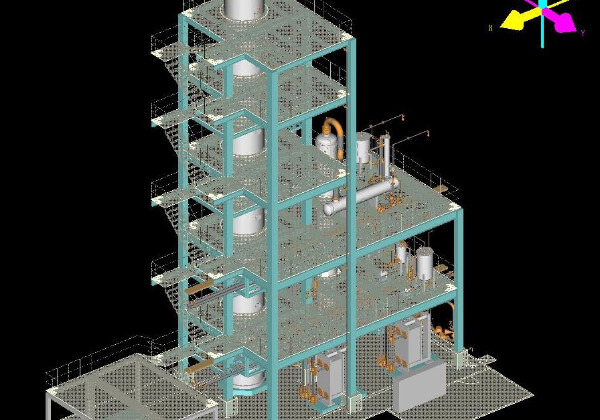
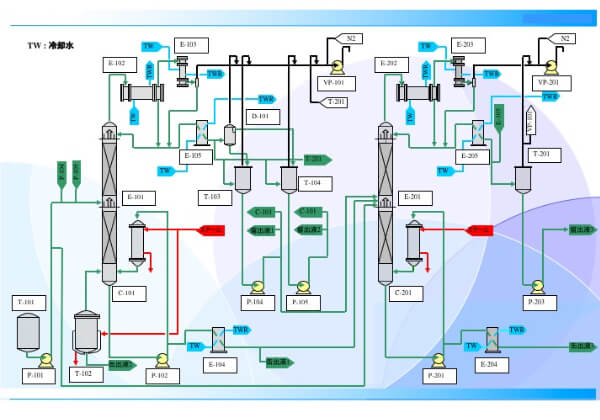
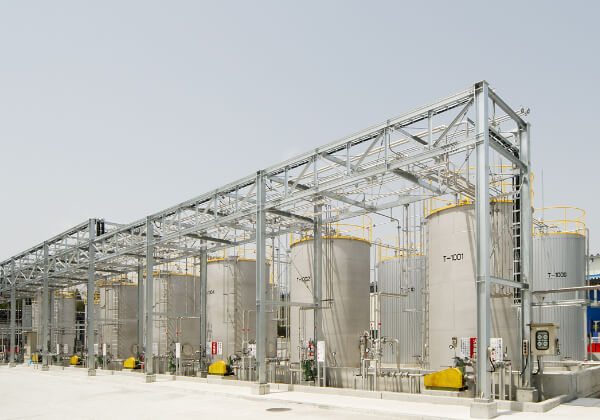
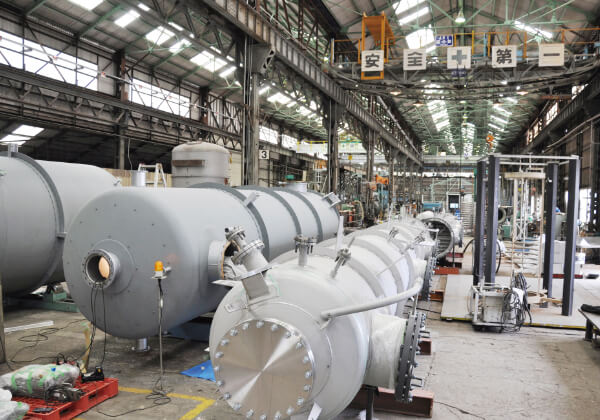
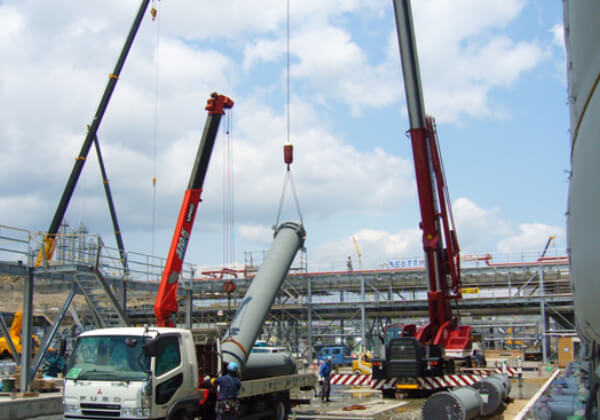
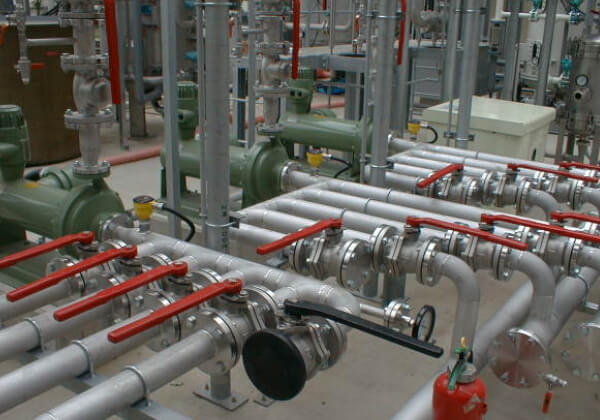
日本化学機械製造株式会社は、化学機器を自社工場にて製造できるプラントエンジニアリング企業です。

自社工場は、高圧ガス設備、圧力容器、また特殊材(耐食材料)の製作も可能で、材料手配から納入まで一括管理を行っています。プラントは様々な装置、機器類の組み合わせで構成されており、エンジニアリングには多くの知識と経験が必要とされます。
イメージ

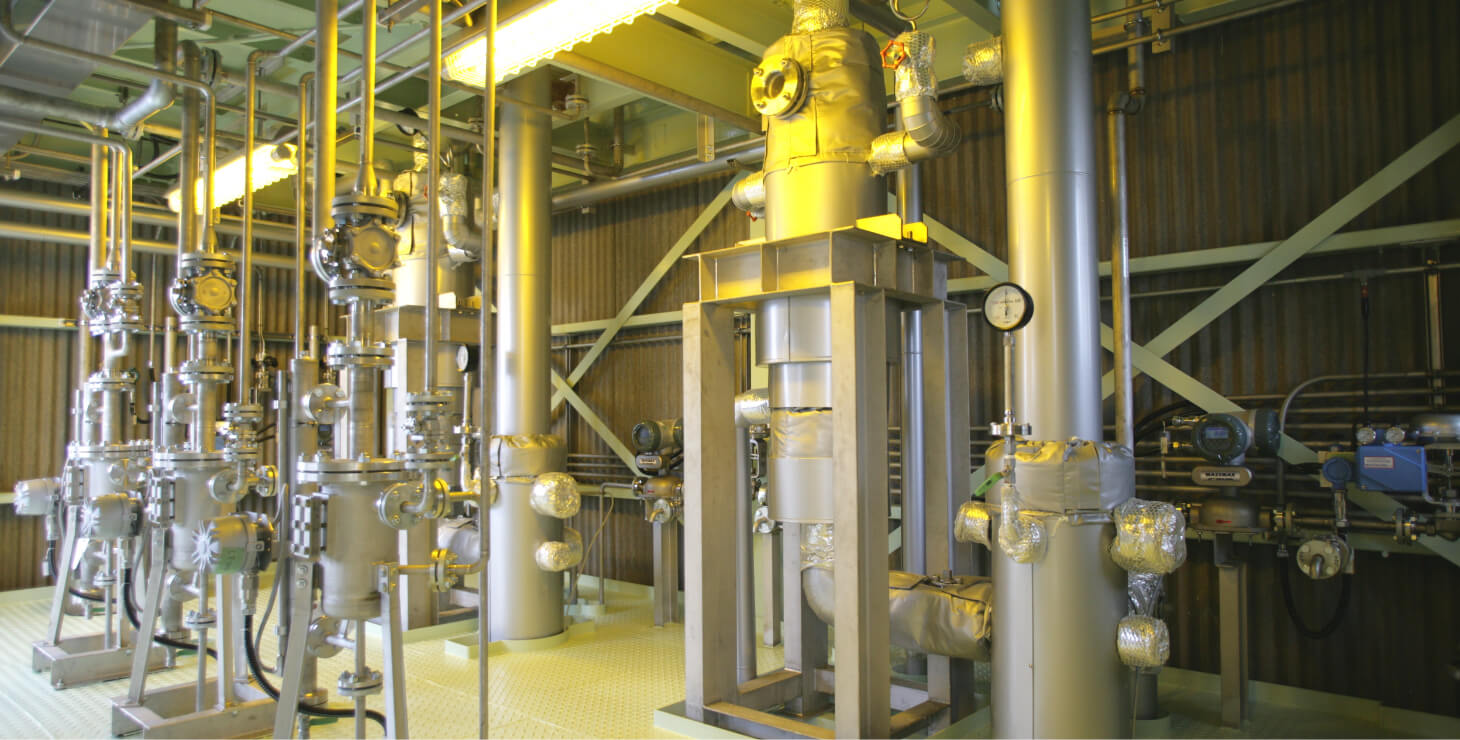
また、時代背景?外部環境の変化に伴いプラントに対するお客様のニーズも多種多様に変化しています。 設備の抱える様々な問題の解決、省エネルギー、環境対策、生産効率、品質向上、新製品生産のプロセス構築?設備計画の具現化によりお客様の事業価値向上の一助となるべく、最新の技術の開発、活用に努めております。 常にお客様の立場になり、安全で効率的な設備の構築を念頭に取り組んでおります。

TWO:On the 14th of January, 1766, the king opened Parliament with a speech, rendered necessary by the change of Ministry and the affairs of America. A great debate followed, in which Burke made his maiden speech, and was followed by Pitt, who said in his loftiest tone of eloquence: "This kingdom has no right to lay a tax upon the colonies. On this point I could not be silent, nor repress the ardour of my soul, smote as it is with indignation at the very thought of taxing America internally without a requisite voice of consent. Taxation is no part of the governing or legislative power. Taxes are the voluntary gift and grant of the Commons alone. At the same time, on every real point of legislation, I believe the authority to be fixed as the pole-starfixed for the reciprocal benefit of the mother country and her infant colonies. They are the subjects of this kingdom, equally entitled with yourselves to all the rights of mankind and the peculiar privileges of Englishmen, and equally bound by its laws. The Americans are the sons, not the bastards of England. The distinction between legislation and taxation is essential to liberty. The Crown, the Peers, are equally legislative powers with the Commons. If taxation be a part of simple legislation, the Crown, the Peers, have rights in taxation as well as yourselvesrights which they will claim whenever the principle can be supported by might."
  • アイコン

    THREE:

    経験と実績をもとに、お客様のニーズに応じた最適な仕様?システムを構築、ご提案いたします。

  • アイコン

    THREE:This and other events at length convinced the stupid and ungrateful Emperor that the war was[56] hopeless. Russia had as good as deserted him; Prussia, so lately won over, was again wavering; Sweden and Holland had joined the allies; and Spain, so far from helping him, could not drive the enemy from a corner of its own territory. He therefore listened to terms of peace which were offered by the allies through the pacific medium of Fleury, and the preliminaries were signed at Paris by the Austrian Ambassador on the 31st of May with England, France, and Holland. The Emperor agreed to suspend for seven years the charter of the Ostend Company; to confirm all treaties previous to 1725; and to refer any other objects of dispute to a general congress. Several articles were introduced regarding Spain. The English consented to withdraw the fleet of Admiral Hosier from blockading Porto Bello, so that the galleons could return home; the siege of Gibraltar was to be discontinued, and the Prince Frederick to be restored. These articles were signed by the Spanish Ambassador at Paris, but Philip himself never ratified them, and England and Spain continued in a dubious state of neither peace nor war.Dumouriez had no sooner come into office than he laid down a great military plan. He proposed that wherever France extended to what he called her natural limitsthat is, to the Rhine, the Alps, the Pyrenees, and the seathey should act only on the defensive; but in the Netherlands, where the territory did not extend to the Rhine, and in Savoy, where it did not extend to the Alps, there they should act on the offensive, and carry France to what he called its boundaries by the genuine laws of nature. This plan was adopted. The Austrians had only thirty thousand men in Belgium, and Lafayette was to make a dash on that division of the Netherlands. From Namur he was to push on for Lige, which would make him complete master of the country, and was to be strengthened by a reinforcement of thirty thousand infantry, so that he would be seventy-five thousand strong before the Emperor could advance to his attack. Further, while Lafayette was marching from Givet on Namur, a division of his army of ten thousand men, under General Biron, was to march upon Mons, where Beaulieu, the Austrian general, was posted with only two thousand five hundred men. On the same day Major-General Theobald Dillon was to advance with three thousand six hundred men from Lille, in Tournay, and to surprise that place. The French calculated on the support of the Belgians who had been strongly inoculated with the spirit of the Revolution. The two smaller divisions were punctual in their movements; but Lafayette, instead of marching simultaneously, remained strengthening himself in his position at Givet. General Biron set out from Valenciennes, and, on the 29th of April, crossed the Belgian frontiers, and the next day marched towards Mons. But no sooner did the French cavalry come in sight of some light troops, said only to amount to about five hundred men, than they fled, crying that they were betrayed. Beaulieu's horse pursued and captured Biron's baggage and military chest. On the very same day, Dillon's division, on their march from Lille to Tournay, fled with the very same cry from nine hundred Austrians who had issued from Tournay. The French officers in vain endeavoured, in both cases, to rally their forces, and Dillon was murdered by his own men on re-entering Lille with a lieutenant-colonel and an unsworn priest. Lafayette, hearing this strange news, did not venture to quit Givet.

    工場建屋、事務所棟、倉庫、試験棟などの建設も一括してご依頼いただけます。

  • アイコン

    THREE:These dispiriting losses, combined with the fall of Minorca, stimulated the public and the mercantile bodies to petition earnestly for the termination of the American war; and Parliament met at the appointed time amid numbers of such demands. Petitions came from the cities of London and Westminster, and many other towns and counties, bearing rather the features of remonstrances. No sooner did the House meet than Fox moved for an inquiry into the causes of the constant failure of our fleets in these enterprises, on which so much had depended. The object was to crush Lord Sandwich, the head of the Admiralty. Fox's motion was rejected, but only by a majority of twenty-two. The strength of Ministers was fast ebbing.As it was, the extreme caution of Kutusoff saved Buonaparte and the little remnant of his army that ever reached France again. Buonaparte left Smolensk with only forty thousand, instead of four hundred and seventy thousand men, which he had on entering Russia, and a great part of the Italian division of Eugene was cut off by the Russians before the Viceroy could come up with Buonaparte. Napoleon, therefore, halted at Krasnoi, to allow of the two succeeding divisions coming up; but Kutusoff took this opportunity to fall on Buonaparte's division, consisting of only fifteen thousand men, and attacked it in the rear by cannon placed on sledges, which could be brought rapidly up and as rapidly made to fall back.

    環境に配慮し、コストメリットを勘案した、省エネルギーで、省スペースな設備をご提案いたします。

  • アイコン

    THREE:

    高圧ガス設備、圧力容器の製造資格を持った自社工場での製作により、品質、納期を管理しております。

  • アイコン

    THREE:

    コストを積算し、見積価格をご提示します。回収期間法などの設備投資の経済性計算をお客様とご一緒にシミュレーションすることも可能です。

  • アイコン

    THREE:The Irish delegates described the condition of Ireland as most deplorable. They said that the Government interest, through the landed aristocracy, was omnipotent; that the manufacturers were unemployed; that an infamous coalition had taken place between the Irish Opposition and Ministry; that the Catholics had been bought up so that all parties might combine to crush Reform; that the United Irishmen were everywhere persecuted, and that one of them had only just escaped from a six months' imprisonment.

    化学工場への納入実績が多く、各種法規にも精通しています。官庁申請書類の作成もサポートいたします。

  • アイコン

    THREE:The success of the Duke of Wellington in carrying Emancipation was fatal to his Government. Almost to a man the Tories fell from him, and he found no compensation in the adhesion of the Whigs. The latter were glad that their opponents had been induced to settle the question, a result which they had long desired, but had not the power to accomplish. Their gratitude, however, for this great service to the public was not sufficiently warm to induce them to enlist under the banner of the Duke of Wellington, though they were ready to come to his assistance, to protect his Government for a time against the violent assaults of the party whose feelings and prejudices he had so grievously outraged. All parties seem, indeed, to have been exhausted by the violence of the struggle, and there was no desire to attempt anything important in the way of legislation during the remainder of the Session. There was nothing extraordinary in the Budget, and it was accepted without much objection. The subject of distress among the operatives gave rise to a debate which occupied two days, and a motion for inquiry into its causes was rejected. The trade which suffered most at the time was the silk trade. It was stated that, in 1824, there were 17,000 looms employed in Spitalfields; now there were only 9,000. At the former period wages averaged seventeen shillings a week, now the average was reduced to nine shillings. By the manufacturers this depression was ascribed to the relaxation of the prohibitory system, and the admission of foreign silks into the home market. On the other hand, Ministers, and the advocates of Free Trade, ascribed the depression to the increase of production, and the rivalry of the provincial towns of Congleton, Macclesfield, and Manchester. That the general trade had increased was shown by the vast increase in the quantity of raw silk imported, and in the number of spindles employed in the silk manufacture. The Government was firm in its hostility to the prohibitory system, and would not listen to any suggestion for relief, except a reduction in the duties on the importation of raw silk, by which the demand for the manufactured article might be augmented. While these discussions were going on in Parliament the silk-weavers were in a state of violent agitation, and their discontent broke forth in acts of lawlessness and destructive outrage. They were undoubtedly in a very miserable condition. It was ascertained that there were at Huddersfield 13,000 persons, occupied in a fancy trade, whose average earnings did not exceed twopence-halfpenny a day, out of which they had to meet the wear and tear of looms, etc. The artisans ascribed this reduction to the avarice of their employers, and they avenged themselves, as was usual in those times, by combination, strikes, and destruction of property. In Spitalfields bands of weavers entered the workshops and cut up the materials belonging to refractory masters. The webs in thirty or forty looms were sometimes thus destroyed in a single night. The same course was pursued at Macclesfield, Coventry, Nuneaton, and Bedworth, in which towns power-looms had been introduced which enabled one man to do the work of four. The reign of terror extended to Yorkshire, and in several places the masters were compelled to succumb, and to accept a list of prices imposed by the operatives. In this way the distress was greatly aggravated by their ignorance. What they demanded was a restrictive system, which it was impossible to restore. The result obtained was simply a reduction of the duties on raw silk.

    社内に様々なテスト装置をそろえておりますので、事前の検証も可能です。
    新製品の生産プロセスの構築もご相談ください。

TWO:

プラントの計画時から、設計、調達、建設、試運転、更には完成後のメンテナンスに至るまでトータルに対応いたします。当社は機器製作工場を所有しておりますので、細やかな機器設計?製作が可能です。

THREE:In Calabria, the two sons of Ferdinand of Naples, Prince Francis and Prince Leopold, in conjunction with General Damas, held a force of fourteen thousand men, and endeavoured to arouse the mountaineers, and repel the advance of the French; but Regnier was dispatched against them, with a force of ten thousand, and soon defeated and dispersed the Neapolitans, making himself master of all the country, except the towns and fortresses of Maratea, Amantea, and Scylla. After three days of a bloody contest, Regnier took Maratea, and gave it up to the soldiery. These atrocities aroused the mountaineers to such fury, that they beset and harassed the French on their march to Amantea like so many demons. Their progress was arrested: Amantea stoutly resisted; Scylla, though taken, was invested by enraged Neapolitans and peasantry, and Reggio was again wrested from them. At this crisis arrived Sir John Stuart in Sicily, to reinforce and take the command of the British troops, and, at the earnest entreaty of the queen, Sir John crossed into Calabria.
  • 事業計画

    FORE:But the Court had hesitated too long. The people had taken the start of them, and now came sounds which paralysed the Court party with consternation. Scarcely was midnight passed on this eventful 14th of July, when the throngs increased rapidly around the Bastille, and the cries grew fiercer, "Down with it!" "Let us storm it!" De Launay, the governor, had made all necessary preparations, charged a dozen long guns on the towers with balls of a pound and a half each, and disposed his little force to the best advantage. While the democratic leaders were negotiating with the garrison, the crowd grew first impatient, then furious. They advanced impetuously against the first drawbridge. Two men mounted the roof of the guard-house, and, with axes, cut the chains of the bridge, which fell down. The mass of assailants rushed forward towards the second bridge, but were met by a discharge of musketry, which did deadly execution amongst them and brought them to a stand. The firing proceeded at once from the towers and from the loop-holes below. A number of the assailants fell, whilst only two of the muskets fired by the people during the whole day took effect. De Launay now gave orders to fire on the assailants with grape. This drove them back to some distance, but they soon came on more furious than ever. De Launay looked in vain for the promised succour from Besenval or Broglie, and seeing the ever-increasing and ever more raging thousands around, he lost his head, was seized with despair, and resolved to blow up the prison and a great part of the old town near it. Six hundred and thirty-five barrels of gunpowder were deposited in the magazine. Seizing a match, he ran to cast it into an open barrel, and thus send into the air the horrible old fortress, himself, and garrison. With it must inevitably have been destroyed all the quarter of the Bastille, all the Marais, and a great part of the Faubourg St. Antoine. Two uncommissioned officers stopped him by crossing their bayonets. He then attempted to kill himself, but was secured. His head was wholly gonehe was no longer capable of issuing an order.

    工場建設、プラント新設の計画の立案には、大きな労力を要します。当社では、お客様の一助となるべく、官庁届け出の助成を行いながら、工場建設を進め、抱えておられる問題の解決に取り組んでおります。

  • 基本構想?基本設計

    FORE:The marquis answered that he had received his letter, informing him of the king's intention to release him from the Government of Ireland, and that he held himself in readiness to obey his Majesty's commands the moment he received them. He did receive them, on the 10th of January, in a formal letter of recall from the Home Secretary.

    主要機器等の仕様を決定し、プラントの基本フローや配置を決定します。

THREE:It was very generally understood that it had been definitely arranged that Lord Londonderry should represent England at the Congress of Verona, and it was universally believed, as we have seen, that this fact weighed on his mind and led to his suicide; but Mr. Gleig states that in consequence of the reluctance expressed by Lord Londonderry to undertake the mission, it had for some time been settled that England should be represented there by the Duke of Wellington, and that he had begun to make his preparations, when a severe illness fell upon him, from which he did not sufficiently recover to set out upon his journey till after Lord Londonderry's death. The Duke of Wellington started for his mission when Mr. Canning had been only forty-eight hours in office. Stress has been laid upon the fact that he received his instructions from Mr. Canning, and this has been declared to be the turning-point in our foreign policy, when England began to disengage herself from the Holy Alliance. She was not formally a party to that alliance, but the despots composing it had counted on her aid and influence in keeping down the nations which they oppressed. But Mr. Gleig states that Lord Londonderry himself had compiled a letter of instruction for the representative of England at the Congress, and that this was transferred without a single alteration to the Duke of Wellington. It is, he says, "a very interesting document. It touches upon every point which could be expected to come under consideration at the Congress, and it handles them all so as to guard with scrupulous care not only the honour of Great Britain, but the rights of foreign peoples as well as of their Governments. It assumes that the subjects of general discussion would be three: first, the Turkish question, external and internal; secondly, the Spanish question, European and American; and, thirdly, the affairs of Italy. With this last question the representative of England was directed not to concern himself at all. As England had been no party to the military occupation of Naples and Sardiniaas she had merely acquiesced in it with a view to prevent worse thingsso she felt herself precluded from advising upon the arrangement now that it was complete, lest by so doing she should appear to admit the justice of a proceeding against which from the outset she had protested. The representative of Great Britain was therefore instructed to hold aloof from all meetings at which Italian affairs were to be discussed, and, if possible, to avoid connecting himself with the Congress till these should have been settled."When Parliament met on the 20th of February, this conspiracy was laid before it and excited great indignation. The two Houses voted cordial addresses to his Majesty, and for a while there was an air of harmony. But the fires of discontent were smouldering beneath the surface, and, on a motion being made in April, in consequence of a royal message, to grant the king an extraordinary Supply in order to enable his Majesty to contract alliances with foreign powers, that he might be prepared to meet any attempts at invasion which the Swedes might, after all, be disposed to make, the heat broke forth. The Supply moved for was fixed at two hundred and fifty thousand pounds. It was expected that Walpole, having had his name suspiciously mentioned in Gyllenborg's correspondence, would take this opportunity to wipe off all doubt by his zeal and co-operation. On the contrary, he never appeared so lukewarm. Both he and his brother Horace, indeed, spoke in favour of the Supply, but coldly; and Townshend and all their common friends openly joined the Tories and Jacobites in voting against it; so that it was carried only by a majority of four. This could not pass; and the same evening Stanhope, by the king's order, wrote to Townshend, acknowledging his past services, but informing him that he was no longer Lord-Lieutenant of Ireland.
  • 詳細設計?エンジニアリング

    FORE:

    設備の構成要素の詳細な仕様や配置を決定し、図面を作成します。

  • 調達

    FORE:5

    詳細設計に基づきポンプや部品類の購入品の調達先を選定し、発注します。
    プラントを構成する主要な機器は特注製作が多く、材料発注、製作、各種検査、運搬まで工程、納期を管理します。

  • 建設

    FORE:[See larger version]But there was another topic started in this first Imperial Parliament which was as odious to George III. as the perfidious conduct of his late Russian ally. As one means of bringing about the union with Ireland, Pitt held out to the Irish Catholics the argument that by having Irishmen in the united Parliament they would be most likely to obtain a repeal of the Catholic disabilities. Both he and Lord Cornwallis had sent circulars to this effect, anonymous, it is true, but with a secret avowal of their authorship, amongst the leading Catholics, which had a great effect in procuring their assent to the union. Lord Castlereagh, who as Secretary of State for Ireland had helped to carry the union, claimed the redemption of this pledge. The matter was talked over in the Cabinet during the autumn of 1799, and again in September, 1800. Pitt introduced the subject about the middle of January in the Privy Council. But in the interval the Chancellor, Lord Loughborough, had betrayed the plan to the king, and in conjunction with Lord Auckland had convinced his Majesty that it would involve a violation of the Coronation Oath. George was indignant, and almost furious. At the levee on the 28th of January, when Lord Castlereagh was presented, he said to Dundas, "What is this which this young lord [Castlereagh] has brought over to fling at my head?" He alluded to a plan for Catholic emancipation, and added, "I shall reckon every man my personal enemy who proposes any such measure! This is the most jacobinical thing I ever heard of." Dundas replied that his Majesty would find amongst those friendly to the measure some whom he had never supposed to be his enemies. On the 31st of January Pitt wrote to the king, assuring him that the union with Ireland would render it absolutely necessary that important questions regarding the Catholics and Dissenters should be discussed; but, as he found how extremely such[479] topics were disliked by his Majesty, and yet how just it was that Catholics should be admitted to Parliament as well as Protestant Dissenters, who were already admitted, he begged to be permitted to resign. At the same time, not to inconvenience his Majesty, he was willing to hold office till his Majesty had reconstructed a Cabinet wholly to his mind. George replied, the very next day, that Mr. Pitt's letter had occasioned him the liveliest concern; that, so far from exposing him to the agitation of this question, he had flattered himself that the union, by uniting the Protestants of both kingdoms, would for ever have excluded the question of Catholic emancipation. He expressed his ardent wish that Pitt should continue to be his Minister as long as he lived; and he only required, as a condition, that he should stave off this question. Pitt replied, on the 3rd of February, that his Majesty's determined tone on the subject of Catholic emancipation left him no alternative but to resign, in compliance with his duty; and that, as his Majesty's resolve was taken, it would certainly be best for the country that his retirement should be as early as possible. On the 5th the king wrote, accepting Pitt's resignation, though with expressions of deep regret.

    安全を第一に、管理技術者が責任を持って施工、工程、品質の管理を行いながら協力会社と連携し進めていきます。
    土木?建築、機器据付、配管、電気?計装、断熱などの工事があります。

  • 試運転

    FORE:In the south, affairs had been as ill conducted by the English commanders as in the north they had been carried on well. Governor Martin had made an effort to recover North Carolina. He had collected a number of Highlanders, recently emigrated to America, and a number of back-woodsmen, called Regulators, and sent them, under the command of Colonels Macdonald and Macleod, to compel the inhabitants to submission. They were to be supported by regular troops to be landed at Wilmington, and General Clinton was daily expected with the reinforcements from England. But Clinton did not appear, and the impatient Highlanders and Regulators, in marching from Cross Creek to Wilmington, were decoyed into a swamp, and there attacked and beaten. Macleod and most of the Highlanders were taken prisoners, and the Regulators, such as escaped, made again for the woods.

    プラント完成後、性能が出るか試運転を行って確認、調整を行います。
    きめ細やかな運転指導により実運転へのスムースな移行を促します。完成図書と共にお引渡しとなります。

運転?保守フェーズ

  • メンテナンス

    FORE:Measures to alter this disgraceful state of things were repeatedly introduced, but as steadily rejected. The collection of tithes seemed to occupy the chief attention of the Established clergy of Ireland, even where they rendered no spiritual services, and eventually led to a state of irritation and of dire conflict between the Protestant incumbent and the Catholic population which did not cease till after the death of George III. The clergyman called in the soldiery to assist him in the forcible levying of tithes, and the bloodshed and frightful plunder of the poor huts of the Irish in this bellum ecclesiasticum became the scandal of all Christendom ere it was ended by the Act of a later reign, which transferred the collection of tithes to the landlord in the shape of rent.[See larger version]

    プラント、機器の安全と安定稼働のために、定期的なメンテナンスをお薦めいたします。

  • 設備改造拡張

    FORE:The effect of the issue upon the state of parties in England was tremendous. The Morning Chronicle, then the organ of the Whig party, said, "The battle of English liberty has really been fought and won at Paris." The Times thundered the great fact with startling reverberation throughout the United Kingdom. Mr. Brougham in the House of Commons spoke of it as that revolution which in his conscience he believed to be "the most glorious" in the annals of mankind, and he expressed his heartfelt admiration, his cordial gratitude, to the patriots of that great nation for the illustrious struggle they were making. This language expresses the feelings which prevailed through all classes of the people of Britain, and it may be easily supposed that the effect was most favourable to the Liberal party and most damaging to the Tories, especially as the exciting events occurred at the time of the general election; and Prince de Polignac being considered the particular friend of the Duke of Wellington, his Ministry was called in France the Wellington Administration. All these things were against the Premier: the hostility of the anti-Catholic party, the alienation of the Whigs, the accession of a liberal monarch, and the odium of the supposed intimate relationship with the vanquished despotism of France.

    生産量を減らすことなく、生産能力を増強するなど、お客様のご要望にお応えできるソリューションをご提案いたします。

TWO:Napoleon now called up his auxiliary forces from Saxony, Würtemberg, Bavaria, and from all the Confederation of the Rhine, as well as new battalions from France, and advanced against the Russians. In the first place, the French, who had completed the subjugation of the Prussian states east of the Oder, pushed forward towards Poland, to attack the Russian general, Benningsen, who advanced to Warsaw, and occupied it in conjunction with the Prussians. Benningsen, however, finding the Prussians few and dispirited, fell back beyond the Vistula, and Murat, at the head of the French vanguard, entered Warsaw on the 28th of November. He was soon after joined there by Buonaparte, and Warsaw being put into a state of defence, the French army advanced to the Vistula and the Bug, in spite of the lateness of the season. Benningsen again retreated behind the Wkra, where he united his forces with those of Generals Buxhowden and Kaminskoi. Kaminskoi took the supreme command. When Napoleon arrived at the Wkra on the 23rd of December, he formed his army into three divisions, and forced the passages of the river. Kaminskoi fell back behind the Niemen, and the French pursued him, committing some injury on him. This trifling advantage Napoleon converted, in his bulletins to Paris, into the rout and general defeat of the Russians. It was true that the Russians were destitute of stores, having applied to Britain for money, and obtained only eighty thousand pounds. They fought, therefore, under great disadvantages, against an army furnished with everything. Notwithstanding, Benningsen, who was by far the most vigorous of their generalsfor Kaminskoi was fast falling into lunacyposted himself strongly behind Pultusk, his right led by Barclay de Tolly, and his left by Ostermann. Kaminskoi ordered Benningsen to retreat, but he refused, and stood his ground. At first Tolly was driven back by Lannes and Davoust, but Benningsen converted this disadvantage into a ruse, ordering Tolly to continue his retreat, till the French were drawn on, so that he could bring down his left wing on them. This he did with such effect that he killed and wounded nearly eight thousand of them, having, however, himself five thousand killed and wounded. Lannes and five other generals were amongst the wounded. The French seized the opportunity of darkness to retreat with such speed, that the next morning not a trace of them could be seen near Pultusk. Prince Galitzin fought another division of the French the same day at Golynim, and with the same success. Had Benningsen had the chief command, and brought down the whole united Russian army on Napoleon, the victory must have been most decisive; as it was, it taught the French that they had different troops to Prussians or Austrians to contend with. They drew off, and went into winter quarters at Warsaw and the towns to the eastward. The chief command of the Russian army was now conferred on Benningsen, and so far from Buonaparte having, as he boasted, brought the war to a close with the year, we shall find Benningsen, at the head of ninety thousand men, soon forcing him into a winter campaign.It was no wonder that Spain, feeling the serious effects of this state of things, should resist it; and when she did so, and exerted an unusual degree of vigilance, then the most terrible outcries were raised, and wonderful stories were circulated of Spanish cruelties to our people beyond the Atlantic. At this time the Opposition got hold of one of these, and made the House of Commons and the nation resound with it. It was, that one Captain Robert Jenkins, who had been master of a sloop trading from Jamaica, had been boarded and searched by a Coastguard, and treated in a most barbarous manner, though they could detect no proof of smuggling in his vessel. He said that the Spanish captain had cut off one of his ears, bidding him carry it to his king, and tell his Majesty that if he were present he would treat him in the same manner. This story was now seven years old, but it was not the less warmly received on that account. It excited the utmost horror, and Jenkins was ordered to appear at the bar of the House of Commons on the 16th of March, to give an account of the outrage himself; and it would appear that both he and other witnesses were examined the same day. Jenkins carried his ear about with him wrapped in cotton, to show to those to whom he related the fact, and the indignation was intense. He was asked by a member how he felt when he found himself in the hands of such barbarians, and he replied, "I recommended my soul to God, and my cause to my country." The worthy skipper had probably been crammed with this dramatic sentiment by some of his clever Parliamentary introducers; but its effect was all the same as if it had been a genuine and involuntary expression of his own mind. Researches made at the Admiralty in 1889 proved that he really had lost an ear.

お客様のプロセスノウハウと当社の固有技術の融合によって最適化、効率化、さらには環境に優しい設備を実現をいたします。海外現地法人(タイ、ベトナム)におきましても同等のエンジニアリングが提供できるように、本社の技術者と連携し管理いたしております。
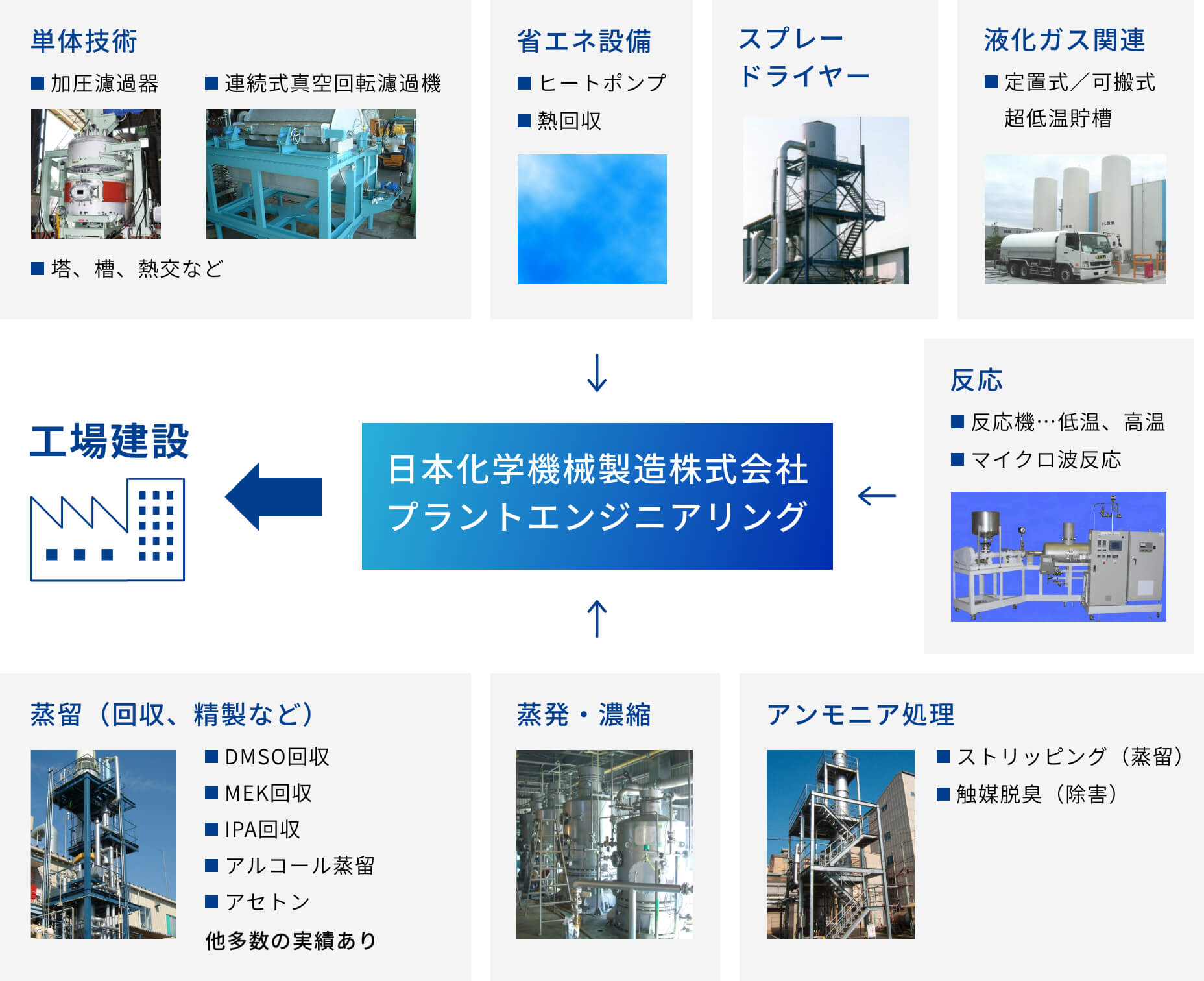
プラント建設と当社の技術

※これ以外にも様々な単位操作装置、単体機器製作ができます。

TWO:Immediately after this debate the Government took active steps to crush that spirit of free discussion in books, pamphlets and associations, which no doubt had been greatly stimulated by the excitement of the French Revolution, and which they professed to believe was aiming at the same objectthe destruction of the monarchy. But in attempting to check this spirit, they adopted the un-English plan of fettering the press and individual opinion. Pitt's Government issued a proclamation against seditious books, and societies corresponding with the Republicans across the water; and magistrates were desired to make diligent inquiries as to the authors of seditious books and pamphlets, to put down all mischievous associations, and to take the promptest means of suppressing and preventing riots and disturbances. An Address in approbation of this proclamation was moved by Mr. Pepper Arden, the Master of the Rolls, in the Commons, and a short debate was the consequence. In this Grey and Fox declared that the proclamation was unconstitutional, mischievous, and oppressive; that it was a stimulus given to hot-headed and bigoted magistrates all over the country to invade the freedom of the press and of private life, on pretence of preventing disturbance; that the true constitutional remedy for any wrong opinions promulgated by the press was their regulation by right and sound opinions; that the blow was aimed against the Society of the Friends of the People, and intended to crush Reform, and divide the Whig party; that, in truth, the riots and instigations to anarchy came not from the Reformers, but from the Church, the magistracy, and the Tories; and they appealed for the truth of this to the disgraceful scenes which had occurred at Birmingham. They reminded Government that in 1782 Pitt had joined the Duke of Richmond, Major Cartwright, and Horne Tooke, in a meeting, at the Thatched House Tavern, for Reform; that they, the Whigs, had never gone to the length of Cartwright and Horne Tooke in their principles of Reform, as Pitt had done; and they reproached the Minister with his shameful inconsistency. Lord John Russell, Francis, Lambton, and others, supported Grey and Fox; and Windham, Lord North, Dundas, etc., supported Pitt. The Address was carried; and when sent up to the Lords produced another striking exhibition of the change going on in the Whig party; for the Prince of Wales, who had hitherto been in such close union with them, and had been so zealously supported by them, now rose and gave his decided approbation to the Address, declaring that he had been educated in admiration of the established Constitution, and was determined, so far as in him lay, to support it. These words were received with triumph by the Government party, the Address was carried almost unanimously, and was followed by an immediate prosecution of the "Rights of Man," by the Attorney-General, which caused it to be far more generally read than it otherwise would have been.
業種?分野 プラント?設備名称 構成プロセス 付帯設備?工事施工
ファインケミカル IT関連化学品プラント 反応プロセス
ろ過分離プロセス
乾燥プロセス
クリーンルーム、充填、タンクヤード、
ユーティリティ、消火?防火設備、
土木?建築、計器?計装工事、
電気工事
食品工業 澱粉工場 反応プロセス
分離プロセス
精製プロセス
脱水?乾燥プロセス
タンクヤード、ユーティリティ、
消火?防火設備、土木?建築、
計器?計装工事、電気工事、
原料受入?貯蔵設備、計量?包装設備
化学工業 合成樹脂工場 > 反応プロセス
蒸留プロセス
濾過分離プロセス
乾燥プロセス
タンクヤード、ユーティリティ、
供給設備、充填、自動倉庫、
焼却設備、出荷設備
食品工業 糖化工場 >
(異性化糖類製造設備)
液化?糖化プロセス
濃縮プロセス
濾過?精製プロセス
タンクヤード、ユーティリティ、
土木?建築、計器?計装工事、
電気工事
環境?リサイクル 溶剤回収プラント 濃縮?調整プロセス
蒸留プロセス
タンクヤード、計量設備、
ユーティリティ、消火?防火設備、
計器?計装工事、電気工事、
原料受入?貯蔵?出荷設備
無機化学工業 触媒製造プラント
(自動車用)
調合プロセス
コーティングプロセス
焼成プロセス
ロボット搬送システム、
原料調整?供給装置
無機化学工業 二次電池用原料
精製プラント
調整プロセス
反応プロセス
分離?濃縮プロセス
蒸留プロセス
タンクヤード、ユーティリティ、
土木?建築、空調設備、集塵?局所排気、
計器?計装工事、
電気工事、貯蔵設備、計量?包装設備
新エネルギー バイオエタノール
大型実証モデルプラント >
蒸留プロセス
脱水プロセス
計器?計装工事、電気工事
無機化学工業 水素回収設備 水素回収プロセス タンクヤード、冷却システム、
計器?計装工事

※納入実績からの一部抜粋となります。ご計画中の設備、プロセスの実績はお気軽にお問い合わせください。

※GMP対応の医薬品製造設備としてバリデーション対応も可能です。

※海外への納入実績もございますので、設備計画の際は是非お声掛けください。

※プラントを構成する当社の特長ある化学機器はこちらからご覧いただけます。

TWO:[436]On the withdrawal of Melville, Whitbread moved for his impeachment, and Mr. Bond for his prosecution in the ordinary courts of law, and this amendment was carried. But Melville preferred impeachment to a trial at common law. Mr. Bond was induced to withhold any further procedure in consequence of his motion, and Mr. Leycester, one of Melville's friends, made a fresh motion for impeachment, which was carried, and on the 26th of June Whitbread, accompanied by a great number of members, impeached him at the bar of the House of Lords. A Bill was also passed through both Houses regulating the course of his impeachment. The impeachment itself, owing to very important events, including the death of Pitt, was not proceeded with till April, 1806. On the 10th of July Lord Sidmouth and the Earl of Buckinghamshire resigned. It was supposed that difference of opinion regarding Lord Melville's case was the cause, and the surmise was correct, Addington taking strong exception to the appointment of Sir Charles Middleton, a very old man, to succeed Melville. Lord Camden succeeded Sidmouth, and Lord Harrowby Lord Buckinghamshire. Castlereagh obtained Camden's post of Secretary of Colonial Affairs. This secession weakened Pitt's Ministry considerably. On the 12th of July Parliament was prorogued, but a message was sent down to the House to enable his Majesty to carry out some arrangements in the north of Europe, which were necessary for the security and independence of Britain, and a sum, in addition to the large supplies already granted, was voted, which was not to exceed three millions and a half.

お客さまからの
お問い合わせ?サポートに関しての
ご連絡を承ります。

お問い合わせフォーム

婷婷成人在线观看高视频在线_婷婷激情五月天成人网妞妞基地_婷婷九月天成人网站_婷婷色成人网站 <000005>

婷婷成人在线观看高视频在线_婷婷激情五月天成人网妞妞基地_婷婷九月天成人网站_婷婷色成人网站

笫四色成人网 婷婷五月天成人激情小说琪琪成人电影第四色 婷婷最新成人影视视频 蝌蚪窝成人av视频琦米成人色阁

On the 11th of March the Earl of Radnor presented a petition adopted at a great meeting of inhabitants of the county of Somerset, which led to a long debate, in the course of which the Duke of Wellington earnestly recommended their lordships to leave the Corn Law as it was, and to continue to maintain the system which it was the object of that law to carry into effect; and the Duke of Richmond declared that he was surprised that any doubt could exist that "the farmers were, almost to a man, hostile to the delusions of Free Trade." On the following evening Mr. Cobden[511] brought forward a motion to inquire into the effects of protective duties on the interests of the tenant-farmers and labourers of the country, promising that he would not bring forward a single witness who should not be a tenant-farmer or a landed proprietor; but the debate concluded with a division which negatived the motion by 244 votes to 153.このページの先頭です
ONE:The first day of 1839 was marked in Ireland by an atrocious crime. The Earl of Norbury, an amiable nobleman, regarded as one of the most exemplary of his class, both as a man and a landlord, was shot by an assassin in the open day near his own house at Kilbeggan, and in presence of his steward. The murderer escaped. This event deserves special mention, because it was, during the year, the subject of frequent reference in Parliament. There was a meeting of magistrates at Tullamore, at which Lord Oxmantown presided, at which the Earl of Charleville took occasion to animadvert very strongly upon an expression in a letter, in answer to a memorial lately presented by the magistrates of Tipperary, in which Mr. Drummond, the Under-Secretary, uttered the celebrated maxim, that "property had its duties as well as its rights." This, in the circumstances of the country, he felt to be little less than a deliberate and unfeeling insult. He did not hesitate to say that the employment of those terms had given a fresh impulse to feelings which had found their legitimate issue in the late assassination. In the course of the meeting resolutions were proposed and carried to the following effect:"That the answer to the Tipperary magistrates by Mr. Under-Secretary Drummond has had the effect of increasing the animosities entertained against the[459] owners of the soil, and has emboldened the disturbers of the public peace. That there being little hope for a successful appeal to the Irish executive, they felt it their duty to apply to the people of England, the Legislature, and the Throne for protection."
ONE:Mr. Nicholls next applied himself to the solution of the problem how the workhouse system, which had been safely and effectually applied to depauperise England, might be applied with safety and efficiency to put down mendicancy and relieve destitution in Ireland. In that country the task was beset with peculiar difficulties. Assuming the principle that the pauper should not be better off than the labourer, it would be difficult to devise any workhouse dress, diet, or lodging that would not be better than what many of the poor actually enjoyed. But, on the other hand, the Irish poor were fond of change, hopeful, sanguine, migratory, desultory in their habits, hating all restraints of order and system, averse from the trouble of cleanliness; and rather than be subject to the restrictions and regularity of a workhouse, an Irishman, in health and strength, would wander the world over to obtain a living. Hence, no matter how well he might be lodged, fed, and clad in a workhouse, he could not endure the confinement. Consequently, Mr. Nicholls found in the state of Ireland no sufficient reason for departing from the principle of the English Poor Law, which recognises destitution alone as the ground of relief, nor for establishing a distinction in the one country that does not exist in the other.But Ministers were too sensible of the unconstitutional character of their deeds to rest satisfied with the mere justification of an accepted report. A Bill of Indemnity was introduced to cover "all persons who had in 1817 taken any part in apprehending, imprisoning, or detaining in custody persons suspected of high treason, or treasonable practices, and in the suppression of tumultuous and unlawful assemblies." Thus Ministers were shielded under general terms, and to avoid all appearance of personal movement in this matter by those in the Cabinet the most immediately active, the Bill was introduced by the Duke of Montrose, the Master of the Horse.
ここから本文です
イメージ

日本化学機械製造株式会社は、化学機器を自社工場にて製造できるプラントエンジニアリング企業です。

自社工場は、高圧ガス設備、圧力容器、また特殊材(耐食材料)の製作も可能で、材料手配から納入まで一括管理を行っています。プラントは様々な装置、機器類の組み合わせで構成されており、エンジニアリングには多くの知識と経験が必要とされます。

イメージ

また、時代背景?外部環境の変化に伴いプラントに対するお客様のニーズも多種多様に変化しています。 設備の抱える様々な問題の解決、省エネルギー、環境対策、生産効率、品質向上、新製品生産のプロセス構築?設備計画の具現化によりお客様の事業価値向上の一助となるべく、最新の技術の開発、活用に努めております。 常にお客様の立場になり、安全で効率的な設備の構築を念頭に取り組んでおります。

TWO:A Privy Council was held at Dublin Castle, at which it was determined to offer rewards for the arrest of the principal conspirators500 for William Smith O'Brien, and 300 each for Meagher, Dillon, and O'Doherty. The offence charged was, having taken up arms against her Majesty. The rewards offered soon brought matters to a crisis. As soon as the proclamations were posted up, Sub-Inspector Trant proceeded from Callan, in the county Kilkenny, with a body of between fifty and sixty of the constabulary, in the hope of capturing some of the proclaimed rebels. Arrived on Boulagh Common, near Ballingarry, on the borders of Tipperary and Kilkenny, they took possession of a slated farmhouse, belonging to a widow named Cormack. This house they hastily fortified, by piling tables, beds, and other articles against the doors and windows. The insurrection actually commenced at a place called Mullinahone, where, at the ringing of the chapel bell, large numbers of the peasantry assembled in arms, and hailed Smith O'Brien as their general. He was armed with a short pike and several pistols, which he had fastened to a belt. On the 26th of July he went to the police barrack, where there were but six men, and endeavoured to persuade them to join him, promising better pay and promotion under the republic, and telling them that they would resist at their peril. They refused. He then demanded their arms, but they answered that they would die rather than surrender them. He gave them an hour to consider, but departed without carrying his threat into execution. On the 29th Mr. Smith O'Brien appeared on Boulagh Common with increased forces, who surrounded the house in which the constabulary were shut up. He went into the cabbage garden to speak to the police at an open window. He addressed one of the men, and earnestly pressed them to surrender and give up their arms. The constable said he would call Mr. Trant. That gentleman immediately hastened to the spot; but the rebel chief had taken his departure. Apprehending an attack, Mr. Trant immediately ordered his men to fire, when a battle commenced, which speedily terminated in the defeat of the rebels, of whom two were killed and several wounded. Two shots were aimed at Smith O'Brien without effect; but one of them hit a rebel who was standing by his side brandishing a pike. He was killed on the spot. Another party of police under the command of Mr. Cox, and accompanied by Mr. French, the stipendiary magistrate, came up at the instant, and fired on the rebels, after which they fled in the greatest disorder. Eighteen were killed, and a large number wounded. The police suffered no loss whatever. A large detachment of the 83rd Regiment and about 150 of the constabulary, with Inspector Blake, hastened to the defence of the besieged party; but when they arrived the danger was over, and the police returned to Callan. That evening twenty signal fires blazed on the mountain of Slieve-na-mon. Next day, being Sunday, the military did not attend public worship, and were everywhere kept on the alert. The greatest excitement appeared amongst the peasantry at the Roman Catholic chapels, who were in hourly expectation of being called upon to act, the most anxious solicitude being painted upon the countenances of the women. There is no doubt, from the temper of the population, that had the priests given the word, there would have been a general rising. But they almost universally condemned the conduct of the leaders as insane, and as certain to involve them and all who joined them in destruction. In the meantime, General[569] Macdonald, at the head of his flying column, consisting of 1,700 men, pursued the insurgents, while troops and artillery were poured into Clonmel, Kilkenny, and Thurles. Near the latter place General Macdonald encamped on the domain of Turtulla, the seat of Mr. Maher, M.P. The butchers of Thurles refused to supply the men with meat, and consequently provisions had to be brought from the commissariat stores at Limerick, and large quantities of biscuits from Dublin, the people having broken into the house of the baker who supplied them with bread at Thurles and destroyed his furniture.
  • アイコン

    豊富な経験?実績から得た
    高度な技術とノウハウ

    経験と実績をもとに、お客様のニーズに応じた最適な仕様?システムを構築、ご提案いたします。

  • アイコン

    工場建設も可能

    工場建屋、事務所棟、倉庫、試験棟などの建設も一括してご依頼いただけます。

  • アイコン

    省エネルギー?
    省スペースに応える

    環境に配慮し、コストメリットを勘案した、省エネルギーで、省スペースな設備をご提案いたします。

  • アイコン

    スペシャリストによる徹底した
    品質?納期管理

    高圧ガス設備、圧力容器の製造資格を持った自社工場での製作により、品質、納期を管理しております。

  • アイコン

    運用コストの最適化

    コストを積算し、見積価格をご提示します。回収期間法などの設備投資の経済性計算をお客様とご一緒にシミュレーションすることも可能です。

  • アイコン

    化学プラントに関する
    法規に精通

    化学工場への納入実績が多く、各種法規にも精通しています。官庁申請書類の作成もサポートいたします。

  • アイコン

    各種テスト装置による
    確認、検証

    社内に様々なテスト装置をそろえておりますので、事前の検証も可能です。
    新製品の生産プロセスの構築もご相談ください。

TWO:

プラントの計画時から、設計、調達、建設、試運転、更には完成後のメンテナンスに至るまでトータルに対応いたします。当社は機器製作工場を所有しておりますので、細やかな機器設計?製作が可能です。

事業計画フェーズ

  • 事業計画

    FORE:The year 1816 was a most melancholy year. Both agricultural and manufacturing labourers rose in great masses to destroy machinery, to which, and not to the temporary poverty of the whole civilised world, exhausted by war, they attributed the glut of manufactured goods, and the surplus of all kinds of labour. In Suffolk and Norfolk, and on the Isle of Ely, the agricultural labourers and fen-men destroyed the threshing-machines, attacked mills and farms, pulled down the houses of butchers and bakers, and marched about in great bands, with flags inscribed "Bread or blood!" In Littleport and Ely shops and public-houses were ransacked, and the soldiers were called out to quell the rioters, and much blood was shed, and numbers were thrown into prison, of whom thirty-four were condemned to death, and five executed. The colliers and workers in the iron mines and furnaces of Staffordshire and Warwickshire, as well as in the populous districts of South Wales, were thrown out of work, and the distress was terrible. The sufferings and consequent ferments in Lancashire were equally great. In Nottinghamshire, Leicestershire, and Derbyshire, the Luddites broke out again, as they had done in 1812, and by night demolished the stocking-frames and the machinery in the cotton-mills. Great alarm existed everywhere, and on the 29th of July a meeting was called at the "City of London" Tavern to consider the means of relieving the distress, the Duke of York taking the chair, the Dukes of Kent and Cambridge, the Archbishop of Canterbury, the Bishop of London, the Chancellor of the Exchequer, and others attending. Many palliatives were proposed, but Lord Cochrane and other reformers declared that the only effectual remedy would be the abolition of the Corn Law. Soup-kitchens were recommended, but in Scotland these were spurned at as only insults to the sufferers; at Glasgow the soup-kitchen was attacked, and its coppers and materials destroyed; and at Dundee the people helped themselves by clearing a hundred shops of their provisions. Insecurity of the Orleanist Monarchythe Spanish Marriageslord Palmerston's Foreign Policymeeting of the French Chambersprohibition of the Reform Banquetthe Multitude in ArmsVacillation of Louis PhilippeHe Abdicates in favour of His GrandsonFlight of the Royal FamilyProclamation of the Provisional GovernmentLamartine quells the PopulaceThe UnemployedInvasion of the AssemblyPrince Louis NapoleonThe Ateliers NationauxParis in a State of SiegeThe Rebellion quelled by CavaignacA New ConstitutionLouis Napoleon Elected President of the French RepublicEffect of the French Revolution in EnglandThe ChartistsOutbreak at GlasgowThe Monster PetitionNotice by the Police CommissionersThe 10th of AprilThe Special ConstablesThe Duke of Wellington's PreparationsThe Convention on Kennington CommonFeargus O'Connor and Commissioner MayneCollapse of the DemonstrationIncendiary Placards at GlasgowHistory of the Chartist PetitionRenewed Gatherings of ChartistsArrestsTrial of the Chartist LeadersEvidence of SpiesThe Sentences.

    工場建設、プラント新設の計画の立案には、大きな労力を要します。当社では、お客様の一助となるべく、官庁届け出の助成を行いながら、工場建設を進め、抱えておられる問題の解決に取り組んでおります。

  • 基本構想?基本設計

    基本構想?基本設計

    主要機器等の仕様を決定し、プラントの基本フローや配置を決定します。

プラント建設フェーズ

  • 詳細設計?エンジニアリング

    詳細設計?エンジニアリング

    設備の構成要素の詳細な仕様や配置を決定し、図面を作成します。

  • 調達

    調達

    詳細設計に基づきポンプや部品類の購入品の調達先を選定し、発注します。
    プラントを構成する主要な機器は特注製作が多く、材料発注、製作、各種検査、運搬まで工程、納期を管理します。

  • 建設

    建設

    安全を第一に、管理技術者が責任を持って施工、工程、品質の管理を行いながら協力会社と連携し進めていきます。
    土木?建築、機器据付、配管、電気?計装、断熱などの工事があります。

  • 試運転

    試運転

    プラント完成後、性能が出るか試運転を行って確認、調整を行います。
    きめ細やかな運転指導により実運転へのスムースな移行を促します。完成図書と共にお引渡しとなります。

運転?保守フェーズ

  • メンテナンス

    メンテナンス

    プラント、機器の安全と安定稼働のために、定期的なメンテナンスをお薦めいたします。

  • 設備改造拡張

    設備改造拡張

    生産量を減らすことなく、生産能力を増強するなど、お客様のご要望にお応えできるソリューションをご提案いたします。

TWO:The next day the Great Mogul went over to the stronger party. He had no further hope of assistance from Sujah Dowlah, and so he rode, with a few followers, to the British camp. He was received most willingly, for, though the British had shown no disposition to recognise his authority, now he was in their hands they acknowledged him as the rightful sovereign of Hindostan, and lost no time in concluding a treaty with him; and, on condition of his yielding certain territories to them, they agreed to put him in possession of Allahabad and the other states of the Nabob of Oude. After this, Munro continuing the war against Sujah Dowlah, endeavoured to take the hill fort of Chunar, in which all the treasures of Cossim were said to be deposited, but failed. On his part, Sujah Dowlah had obtained the assistance of Holkar, a powerful Mahratta chief, and, with this advantage, endeavoured to make a better peace with Munro; but that officer declined treating, unless Cossim and the assassin, Sombre, were first given up to[318] him. Dowlah proposed, instead of this surrender of those who had sought his protection, the usually triumphant argument with the English, a large sum of money. But Munro replied that all the lacs of rupees in Dowlah's treasury would not satisfy him without the surrender of the murderers of his countrymen at Patna. Dowlah, though he would not surrender the fugitives, had no objection to give a secret order for the assassination of Sombre; but Munro equally spurned this base proposal, and the war went on. Munro was victorious, and early in 1765, having reduced the fort of Chunar and scattered Dowlah's army, he entered Allahabad in triumph, and put the Mogul in possession of it.Dr. Thomas Burnet is known for his eloquent and able History of the Earth, "Telluris Sacra Theoria," first published in Latin, and afterwards in English. This work, on which his fame rests, was greatly read and admired at the time, but the discoveries of modern science have reduced it to mere ingenious but unfounded theory. He was also author of "Arch?ologica Philosophica," and some lesser treatises.

お客様のプロセスノウハウと当社の固有技術の融合によって最適化、効率化、さらには環境に優しい設備を実現をいたします。海外現地法人(タイ、ベトナム)におきましても同等のエンジニアリングが提供できるように、本社の技術者と連携し管理いたしております。

プラント建設と当社の技術

※これ以外にも様々な単位操作装置、単体機器製作ができます。

TWO:The English lay all night on their arms, and, as day dawned, began to entrench their position. If ever a general needed to push on his advantage it was now. Every day was consuming Burgoyne's stores; every day was augmenting the forces of the enemy. The country was closed to Burgoyne; it was open with all its resources to the Americans. Yet he lay there, as if paralysed, from the 20th of September to the 7th of October. The reason of this fatal delay is said to have been that Burgoyne had received a letter from General Sir Henry Clinton at New York, informing him that he must expect no co-operation from General Howe, but that he himself would take the responsibility of making a diversion in his favour by attacking the Forts Montgomery and Clinton, on the lower part of the Hudson. Burgoyne, on receiving this intelligence, sent Clinton word that he would remain where he was till the 12th of Octobera fatal resolve, as a calculation of his stores should have shown him, which the acts of the Americans were certain to render calamitous. Elated at being able to stand their ground in some degree, this novel and almost sole success in the war had raised the spirits of the Colonials as by a miracle. They poured in on all sides, and Arnold, ever ready in resource, suggested to Gates an enterprise to be effected while Burgoyne was lying still and consuming his own victuals.The year 1771 opened in circumstances which greatly diminished the interest in Parliamentary proceedings. As all reporting was excluded from the House of Lords, the chief speakers there felt that they were no longer addressing the nation, but merely a little knot of persons in a corner, and consequently the stimulus of both fame and real usefulness was at an end. In the Commons, the desire of the Ministry to reduce that popular arena to the same condition of insignificance produced a contest with the City as foolish and mischievous in its degree as the contests then going on with Wilkes and America. George Onslow, nephew of the late Speaker, and member for Guildford, moved that several printers, who had dared to report the debates of the House of Commons, should be summoned to the bar to answer for their conduct. Accordingly, these mediums of communication between the people and their representatives were summoned and reprimanded on their knees. One of their number, named Miller, however, declared that he was a liveryman of London, and that any attempt to arrest him would be a breach of the privileges of the City. The Serjeant-at-Arms dispatched a messenger to apprehend this sturdy citizen, and bring him before the House; but, instead of succeeding, the Parliamentary messenger was taken by a City constable, and carried before Brass Crosby, the Lord Mayor. With the Lord Mayor sat Alderman Wilkes and Alderman Oliver. It was delightful work to Wilkes thus to set at defiance the House of Commons, which had made such fierce war on him. The Lord Mayor, accordingly, was fully confirmed in his view that the messenger of the Commons had committed a[204] flagrant violation of the City charter, in endeavouring to lay hands on one of its liverymen within its own precincts, and they held the messenger accordingly to bail. The House of Commons was fired with indignation at this contemptuous disregard of their dignity. They passed a resolution, by a large majority, ordering the Lord Mayor and the two aldermen to appear at their bar. Wilkes bluntly refused to attend the House in any shape but as a recognised member of it. Crosby pleaded a severe fit of the gout; and Oliver, though he appeared in his place, refused to make any submission whatever, but told them he defied them. The House, in its blind anger, resolved that Oliver should be committed to the Tower, and Crosby to the custody of the Serjeant-at-Arms. But Crosby declared that he would not accept this indulgence at the hands of the House, but would share the incarceration of his honourable friend; and he was accordingly sent also to the Tower. The people out of doors were in the highest state of fury. They greeted the City members on their way to and from the House, but they hooted and pelted the Ministerial supporters. Charles James Fox, still a Government man, as all his family had been, was very roughly handled; Lord North's carriage was dashed in, and himself wounded; and had he not been rescued by a popular member, Sir William Meredith, he would probably have lost his life. The Commons had engaged in a strife with the City, in which they were signally beaten, and no further notice being taken of the printers, from this time forward the practice of reporting the debates of Parliament became recognised as an established privilege of the people, though formally at the option of the House; and so far now from members or Ministers fearing any evil from it, the most conservative of them would be deeply mortified by the omission of their speeches in the reports. The termination of the Session also opened the doors of the Tower, and liberated the Lord Mayor and Alderman Oliver. They were attended from the Tower to the Mansion House by the Corporation in their robes, where a banquet celebrated their restoration to freedom, and the populace displayed their sympathy by bonfires and illuminations.
業種?分野 プラント?設備名称 構成プロセス 付帯設備?工事施工
ファインケミカル IT関連化学品プラント 反応プロセス
ろ過分離プロセス
乾燥プロセス
クリーンルーム、充填、タンクヤード、
ユーティリティ、消火?防火設備、
土木?建築、計器?計装工事、
電気工事
食品工業 澱粉工場 反応プロセス
分離プロセス
精製プロセス
脱水?乾燥プロセス
タンクヤード、ユーティリティ、
消火?防火設備、土木?建築、
計器?計装工事、電気工事、
原料受入?貯蔵設備、計量?包装設備
化学工業 合成樹脂工場 > 反応プロセス
蒸留プロセス
濾過分離プロセス
乾燥プロセス
タンクヤード、ユーティリティ、
供給設備、充填、自動倉庫、
焼却設備、出荷設備
食品工業 糖化工場 >
(異性化糖類製造設備)
液化?糖化プロセス
濃縮プロセス
濾過?精製プロセス
タンクヤード、ユーティリティ、
土木?建築、計器?計装工事、
電気工事
環境?リサイクル 溶剤回収プラント 濃縮?調整プロセス
蒸留プロセス
タンクヤード、計量設備、
ユーティリティ、消火?防火設備、
計器?計装工事、電気工事、
原料受入?貯蔵?出荷設備
無機化学工業 触媒製造プラント
(自動車用)
調合プロセス
コーティングプロセス
焼成プロセス
ロボット搬送システム、
原料調整?供給装置
無機化学工業 二次電池用原料
精製プラント
調整プロセス
反応プロセス
分離?濃縮プロセス
蒸留プロセス
タンクヤード、ユーティリティ、
土木?建築、空調設備、集塵?局所排気、
計器?計装工事、
電気工事、貯蔵設備、計量?包装設備
新エネルギー バイオエタノール
大型実証モデルプラント >
蒸留プロセス
脱水プロセス
計器?計装工事、電気工事
無機化学工業 水素回収設備 水素回収プロセス タンクヤード、冷却システム、
計器?計装工事

※納入実績からの一部抜粋となります。ご計画中の設備、プロセスの実績はお気軽にお問い合わせください。

※GMP対応の医薬品製造設備としてバリデーション対応も可能です。

※海外への納入実績もございますので、設備計画の際は是非お声掛けください。

※プラントを構成する当社の特長ある化学機器はこちらからご覧いただけます。

Contactお問い合わせ

お客さまからの
お問い合わせ?サポートに関しての
ご連絡を承ります。

お問い合わせフォーム

[450][See larger version]To these, in 1785, the Rev. Dr. Edmund Cartwright introduced a loom for weaving by water or steam power, which soon superseded hand-loom weaving. In 1803 Mr. H. Horrocks greatly improved this, and from this germ has grown up the system of weaving cottons, silks, and woollens by machinery. Add to this the application of similar machinery to calico-printing, and the like to weaving of lace, invented by Robert Frost, of Nottingham, or by a working mechanic of that town named Holmes, which afterwards received many improvements, and we have the varied means by which the manufacturing power of England was raised far above that of all the world; and which, reaching other countries in spite of legislative impediments, soon established similar manufactures in France, Belgium, Germany, Switzerland, and America. In Great Britain alone the importation of raw cotton was increased from 4,764,589 lbs. in 1771 to 151,000,000 lbs. in 1818; and such was the spread of trade of all kinds from the use of machinery, that our exports of manufactured goods in 1800, when the European nations were incapacitated for manufacturing by Napoleon's general embargo, amounted to 116,000,000.[See larger version][See larger version]
婷婷五月丁香色成人

婷婷五月丁香色成人

婷婷大香蕉成人

婷婷五月丁香色成人网

婷婷五月色情成人网站

蝌蚪窝成人网址

<000005>