THREE:But why does this crime never entail disgrace upon its author, seeing that it is a theft against the prince, and consequently against the nation? I answer, that offences which men do not consider can be committed against themselves do not interest them enough to produce public indignation against their perpetrator. Smuggling is an offence of this character. Men in general, on whom remote consequences make very feeble impressions, do not perceive the harm that smuggling can do them, nay, often they enjoy a present advantage from it. They only perceive the injury done to the sovereign; they are not interested, therefore, in withdrawing their favour from a smuggler as much as they are in doing so from a man who commits a theft in private life, who forges a signature, or brings upon them other evils. The principle is self-evident, that every sensitive being only interests himself in the evils which he knows. This crime arises from the law itself; since the benefit it promises increases with the increase of the import duty, and therefore the temptation and the facility of committing it increases with the circumference of territory to be guarded and the small size of the prohibited wares. The penalty of losing both the prohibited goods, and whatever effects are found with them, is most just; but its efficacy will be greater in proportion as the import duty is lower, because men only incur risks relative to the advantage derivable from the prosperous issue of their undertaking.The voice of a philosopher is too feeble against the noise and cries of so many followers of blind custom, but the few wise men scattered over the face of the earth will respond to me from their inmost hearts; and, amid the many obstacles that keep it from a monarch, should truth perchance arrive in spite of him at his throne, let him know that it comes there attended by the secret wishes of all men; let him know that before his praises the bloody fame of conquerors will be silenced, and that posterity, which is just, will assign him the foremost place among the pacific triumphs of a Titus, an Antonine, or a Trajan.
FORE:
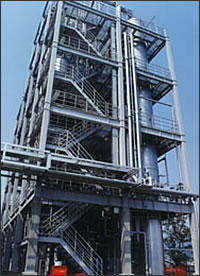
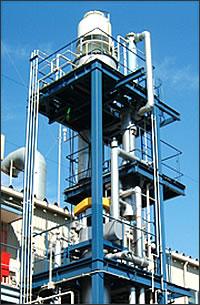
Methanol refinement systems, amyl alcohol refinement systems, ethanol refinement systems, hexanol distillation systems, propanol refinement systems, cyclohexanol distillation systems, isopropanol dehydration systems, ethylene glycol recovery systems, and butanol distillation systems.
FORE: An error, not less common than it is contrary to the object of society¡ªthat is, to the consciousness of personal security¡ªis leaving a magistrate to be the arbitrary executor of the laws, free at his pleasure to imprison a citizen, to deprive a personal enemy of his liberty on frivolous pretexts, or to leave a friend unpunished in spite of the strongest proofs of his guilt. Imprisonment is a punishment which, unlike every other, must of necessity precede the declaration of guilt; but this distinctive character does not deprive it of the other essential of punishment, namely, that the law alone shall determine the cases under which it shall be merited. It is for the law, therefore, to point out the amount of evidence of a crime which shall justify the detention of the accused, and his subjection to examination and punishment. For such detention there may be sufficient proofs in common[133] report, in a man¡¯s flight, in a non-judicial confession, or in the confession of an accomplice; in a man¡¯s threats against or constant enmity with the person injured; in all the facts of the crime, and similar indications. But these proofs should be determined by the laws, not by the judges, whose decisions, when they are not particular applications of a general maxim in a public code, are always adverse to political liberty. The more that punishments are mitigated, that misery and hunger are banished from prisons, that pity and mercy are admitted within their iron doors, and are set above the inexorable and hardened ministers of justice, the slighter will be the evidences of guilt requisite for the legal detention of the suspected.In these ¡®Notes and Observations¡¯ Beccaria and his work were assailed with that vigour and lucidity for which the Dominican school of writing has always been so conspicuous. The author was described as ¡®a man of narrow mind,¡¯ ¡®a madman,¡¯ ¡®a stupid impostor,¡¯ ¡®full of poisonous bitterness and calumnious mordacity.¡¯ He was accused of writing ¡®with sacrilegious imposture against the Inquisition,¡¯ of believing that ¡®religion was incompatible with the good government of a state;¡¯ nay, he was condemned ¡®by all the reasonable world as the enemy of Christianity, a bad philosopher, and a bad man.¡¯ His book was stigmatised as ¡®sprung from the deepest abyss of darkness, horrible, monstrous, full of poison,¡¯ containing ¡®miserable arguments,¡¯ ¡®insolent blasphemies,¡¯ and so forth.
Hexane distillation systems, tall oil distillation systems, benzene distillation systems, lubricating oil refinement systems, xylene-free distillation systems, low-boiling gas distillation systems, ethylbenzene recovery systems, fusel oil distillation systems, naphthalene distillation systems, propylene recovery systems, and turpentine oil distillation systems.
FORE: This useless prodigality of punishments, by which men have never been made any better, has driven me to examine whether the punishment of death be really useful and just in a well organised government. What kind of right can that be which men claim for the slaughter of their fellow-beings? Certainly not that right which is the source of sovereignty and of laws. For these are nothing but the sum-total of the smallest portions of individual liberty, and represent the general will, that is, the aggregate of individual wills. But who ever wished to leave to other men the option of killing him? How in the least possible sacrifice of each man¡¯s liberty can there be a sacrifice of the greatest of all goods, namely, of life? And if there could be that sacrifice, how would such a principle accord with the other, that a man is not the[170] master of his own life? Yet he must have been so, could he have given to himself or to society as a body this right of killing him.Even inanimate objects or animals it has been thought through many ages reasonable to punish. In Athens an axe or stone that killed anyone by accident was cast beyond the border; and the English law was only repealed in the present reign which made a cartwheel, a tree, or a beast, that killed a man, forfeit to the State for the benefit of the poor. The Jewish law condemned an ox that gored anyone to death to be stoned, just as it condemned the human murderer. And in the middle ages pigs, horses, or oxen were not only tried judicially like men, with counsel on either side and witnesses, but they were hung on gallows like men, for the better deterrence of their kind in future.[41]
Ether distillation systems, camphor distillation systems, epichlorohydrin distillation systems, aniline distillation systems, dioxane refinement systems, acetonitrile distillation systems, furfural refinement systems, formalin distillation systems, cyclohexane distillation systems, monoethanolamine rectification systems, polyglycol ether distillation systems, dimethylformamide recovery systems, acrylic glycol ether distillation systems, acrylonitrile refinement systems, acetone recovery systems, pyridine distillation systems, methyl ethyl ketone recovery systems, picoline distillation systems, methyl isobutyl ketone recovery systems, and acetaldehyde recovery systems.